

If you carry joy in your heart, you can heal any moment. ~ Carlos Santana
Rev Kane’s Wild Ride: Heart Surgery Tips
First, the general disclaimer. I’m not a doctor, this post is not medical advice in any way. These are just suggestions from my own experience that may or may not work for you. If you are about to, or have just had open heart surgery, ALWAYS, clear any plans you have with your care team.
Recently I had open heart surgery to replace a bicuspid aortic valve and two aneurysms, an ascending aortic as well as a root aneurysm. When I was in the hospital, one of my doctors said to me, that I was the most prepared and mobile heart patient she’d ever had and asked me what I had done. That, with some pointers about making recovery easier, is what I’ll be answering with this post. I’ve done a previous post where I laid out exactly what procedure I had, and what the experience was like.
Another little disclaimer, I’m 60, which is pretty young for this type of surgery. As you bang around on the net looking at information about preparing and recovering from heart surgery, and you’re in decent health like I was, the information seems a little off. It took me some time to realize, that the average patient getting this surgery is typically in their 70’s and have symptoms and are not likely very mobile or in great physical condition. If you’re reading this, my biggest recommendation is to tailor the advice to your own current level of fitness and ability.
The biggest thing I did prior to the surgery was to make sure I was in the best possible cardio-vascular health I could reasonably be in given I work and have a life. So no, I wasn’t out running five miles a day (I actually hate running) or doing ridiculous workouts in the gym. What I started doing was walking a minimum of two miles a day. My goal was every day to do between two and four miles with the occasional weekend walk of six or eight miles. For me, that meant a long day walking around San Francisco and eating good food. So effectively, the minimum was forty minutes to an hour of walking each day and I didn’t always do it in one walk, my busy life and job didn’t always allow for that. So sometimes it was one forty minute walk, and other days it was four ten minute walks in between meetings. Also remember rest is important, I did minimal walking or exercising every Monday, you need to give your body time to rest and recover. The big thing is consistency, you don’t have to walk fast, but doing this every day will absolutely improve your cardiovascular fitness, and you don’t need a gym, special equipment or anything else, you can walk anywhere. Seriously, your neighborhood, your apartment complex, parking lots, the mall, it doesn’t matter where, just that your walking. Now, the longer the continuous walk the higher the impact, but if you’re consistent, you’ll see benefits. There are lots of articles on the benefits of walking, here’s a link to one that also includes a 12-week walking plan.
So that’s my first and maybe my most important recommendation. Walking will both get you in better cardiovascular shape and strengthen your legs and core. This will be important in recovery as you begin walking after surgery. Which leads to my second recommendation, core exercises. Again, do these at whatever level you are comfortable working at but they are important. You see, post open heart surgery, you will not only be recovering from a damaged heart, but you will also be recovering from a broken (cut in half) sternum (breastbone) the sternum injury, of the two, takes the absolute longest to heal for most people. Your breastbone will fuse in six to eight weeks, but won’t be functionally healed for twelve weeks, this is why most people get twelve weeks of medical leave. It’s at that point, I’ve been told I can start resistance training (weight lifting) again. However, last week I talked to an EMT who broke his sternum and he said it was a full six months before he really felt like he was near normal and could start training again. The sternum injury recovery is a long process requiring patience, but it also means that a lot of things you normally do with your arms, will not be available to you, particular pushing and pulling with any force. I learned this shortly after returning home, the details don’t matter but I had a shotgun I needed to unload, I quickly realized I did not have the strength to rack a shotgun. Something I’d been doing since I was fourteen years-old.
Probably the biggest place this kicks in is getting up and down out of bed and chairs. We typically use our arms to push up out of a chair, that is no longer available to you for at least three months. It is one of the reasons, most people sleep in a recliner for the first week or two at home, they don’t have the ability otherwise to get out of bed unassisted. Now, if you have a constant caretaker it’s a bit different they can certainly assist you. For this reason core exercises become really important, it will be by the strength of your core muscles that you will need to get up and down out of chairs and beds. Even when being assisted, you’ll need these muscles to help you up. I was doing core workouts for six months prior to surgery to be in a better mobility position after surgery, I’m really glad I did them. Here’s a link to a set of core exercises for absolute beginners that you can do. Again, you don’t need a gym or equipment, just a little space at home. And here is a link to exercises that are a little more advanced for those of you who are already in good walking shape.
Another part of the preparation that I did, which is just common sense but sometimes escapes people, is that I practiced everything I normally do without using my arms. Or, without using my arms outside the core of my body. You’ll get information on doing things in the core, here’s an image to give you an idea of what keep your moves in the tube means:
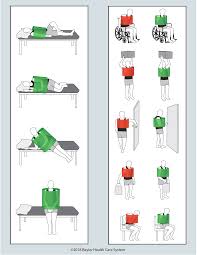
So one of the things I did pre-surgery was to practice getting in and out of every seating surface in my apartment and my deck. Additionally, I practiced getting out of bed, which is when I found out, I was not going to be able to sleep in my bed for at least a few weeks after surgery. It’s not unusual for folks to spend a couple of weeks in a recliner after surgery so I wasn’t too upset. I do live alone, so one other factor for me was that I had to be able to do all of this with no support from anyone else. If I couldn’t do that, I was going to either need to go into a rehab facility for a time (not paid for by my insurance) or bring in a nurse at night (also not paid for by insurance). What I found out was that certain chairs were easier than others to get in and out of, my deck chairs needed a cushion on them so that I could easily get in and out. My couch worked well, the recliner was a breeze, like I said however my bed was out.
Sleep is incredibly important to recovery, it helps you heal faster and with less pain. My first couple of nights alternating between the recliner and the couch taught me immediately this was not the right option. I’d get maybe three hours and then wake up with stiff muscles or joints because I could never find a great position to sleep in all night. While this wasn’t terrible, it was about the equivalent to the way they wake you up in the hospital, it also wasn’t great. That’s when I broke down and bought a head adjustable bed frame. I got incredibly lucky, I’d found a good frame and mattress set online for a not insane price about $1700. But that also involved it being shipped, needing help to set it up and having my current bed removed which meant calling the junk guys to come and remove it which was another cost. At the last minute it hit me, local places often advertised installation and removal of your old bed. So I went online and found an adjustable frame that looked like it would support my current mattress. The next morning, a Saturday, I made a call to Bedroom Express. I asked about the frame, it was on the web as $499, I asked about fitting my mattress, and installation and removal of the old bed. Turned out the store was two miles from my home so 50% off the delivery fee, installation was free, the frame was on sale for $399, I had mentioned I was recovering from heart surgery and so he waived the removal fee. Oh, this was 10:30AM, they had it delivered and set up by 2:30. All in all $500 and I had the bed in hours. Having the head up bed was a game changer. It meant I could easily get in and out of bed and most importantly, I was sleeping in my own bed.
It’s important to really analyze your home with the limitations you’ll have in mind. You’ll have no upper body strength, won’t be able to carry but a few pounds. How will you do laundry, what things are on high shelves that should be re-positioned? You may be on heavy pain medications, how is your house set up for movement if you’re unstable? Are there clear paths around your home? Do you need a shower stool? One thing I did was to install some handholds in my shower. They weren’t the same as handicap bars but they gave me something to grab on to and feel more confident the first few days home. I also for the first week, only showered when someone else was in the apartment.
Next is the thing I did that I was most happy about. No, not the bed, the hand holds in the shower, moving food and pots and pans to my kitchen counter, nope, my most genius decision was in response to the inability to be able to bend over after surgery, I bought a grabber.
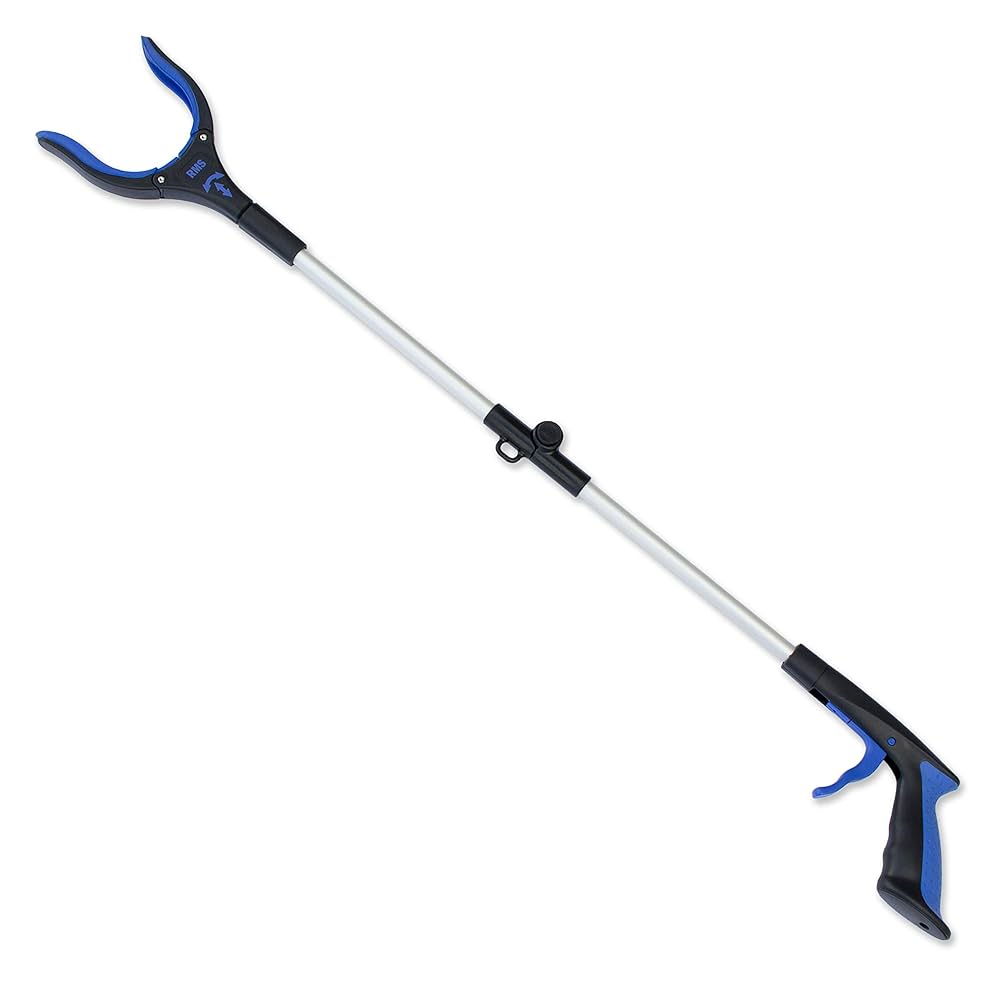
Then, and Watchmen fans will appreciate this, it hit me, who grabs the grabber if it falls to the ground. So I bought a second one. It’s been so amazingly helpful and is able to pick up far smaller things than I imagines, I have often picked up pills I’ve dropped on the floor. This has been so incredibly useful, I may never bend over again.
Finally, and for most people this will be easy, but I’m a loner, who lives alone and is a bit anti-social. Get your support team in place. Make sure you have at least a handful of people you can really count on. I was surprised how many people volunteered to do this without being asked. Especially if you live alone, I recommend two visitors a day the first two weeks and then you can start to tail off. By week six I was only calling people to move stuff around the apartment. At that point I was also cleared to drive so I didn’t need to rely on people for rides.
The final piece of advice really comes from my long-distance hiking experience. I’ve hiked a thousand miles on the Appalachian Trail. I’ve hiked across Scotland three times, part of the Camino in Spain and spent thirty days hiking in the high passes of the Himalayan Mountains including Everest Base Camp. What everyone expects is that the physical exertion will be a test and of course it is. But with these types of hikes, like the surgery, people often fail to prepare for the mental aspects. You’re going through a trauma, there is a lot of fear and anxiety going in and even after. That first week or so, every weird heartbeat feels like imminent death, every crack your sternum falling out of place and every weird blood pressure reading is a problem. I had night sweats one night and was convinced it was a symptom of Afib. It’s really stressful and scary, that’s ok, you’ve had one of the most major surgeries anyone can have, they stopped your damn heart. In doing my own research a lot of people react weirdly, some get a new purpose in life, some get incredibly depressed. So be prepared for this. Avoid boredom, get your Netflix and other streaming ques ready, have a stack of books or a subscription to an audio book service. Do you have hobbies you can still engage? Make sure you have everything you need to do them. Also, remember that you’re healing mentally as well as physically. So do the things that support and lift your spirits. Does watching birds make you happy, buy a bird feeder you can watch. Make contact with the best people in your life, the ones that support and lift your mood. Avoid whenever possible the people who bring you down. Do you love chocolate or a type of candy, make sure to have some in the house. One of the things I did was to make sure I had some of my craving foods available in case I had a craving. Silly things, top ramen, Spaghettios, ice cream and yes, dark chocolate.
Don’t be afraid to ask for help as you go through this. People understand and will be there to help you, but help means mood lifting as well. Need to get out of the house, ask for someone to just take you for a drive. Go to movie mattinees, walk in the park or by the river or the ocean. Most mornings I take a half hour and just sit in the sun on my deck and listen to a podcast. Once I’m back to work, that’s a pleasure I won’t be able to engage in.
So my friends, take care of yourself, be prepared. Get in better shape by walking, do your core exercises, practice the movements you’ll do post surgery, make sure you can get good sleep, take care of your mood and mental health, ask for help, ask your care team lots of questions and of course BUY A GRABBER!
Finally, good luck and I hope your experience turns out to be a good one. ~ Rev Kane

 The Ministry of Happiness